AI, DATA PROTECTION AND THE RULE OF LAW
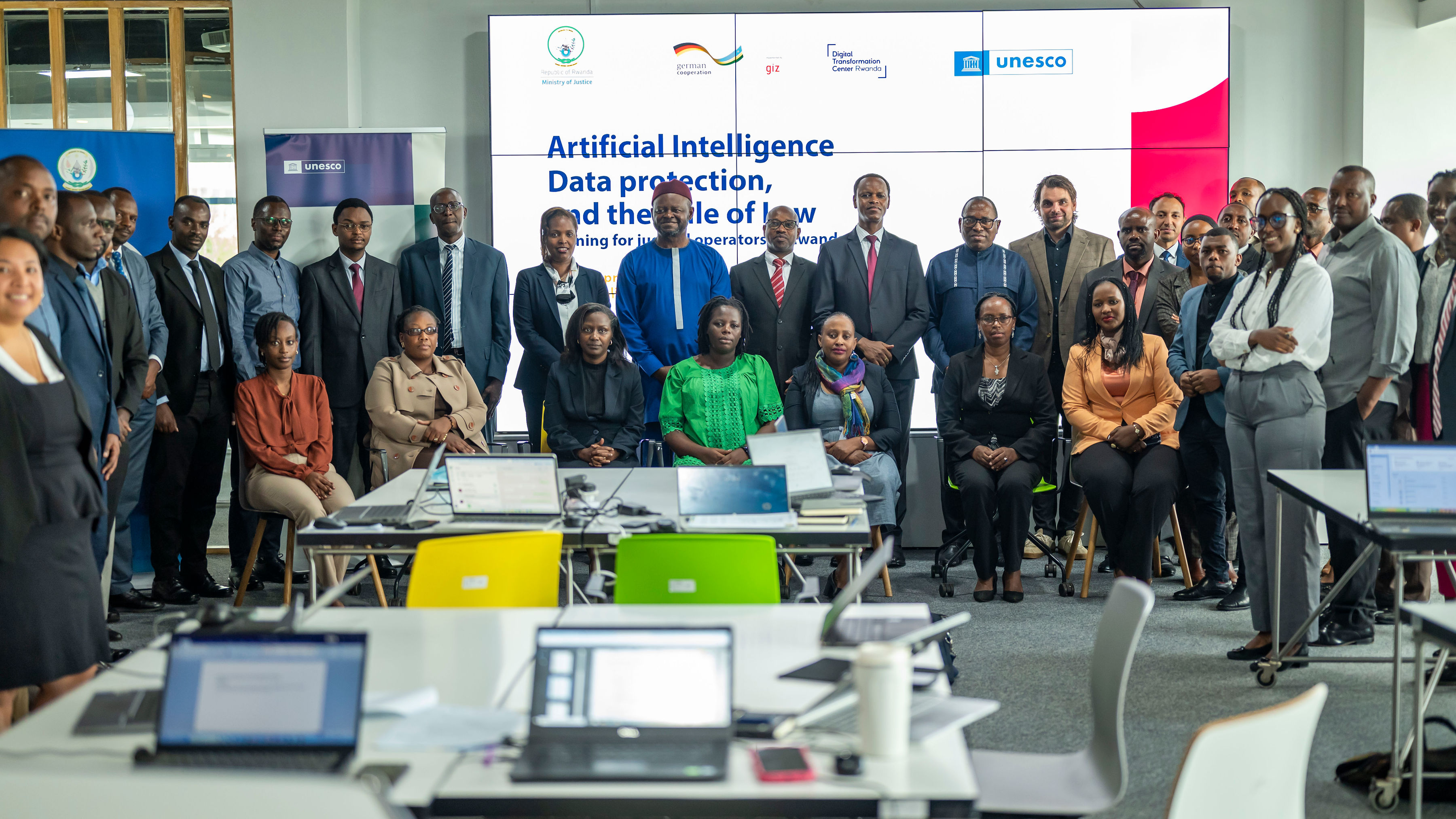
On 14 and 15 April, UNESCO, GIZ and the Ministry of Justice in Rwanda, organized a national training on Artificial Intelligence, Data protection and the Rule of Law for Judicial Operators in Kigali, Rwanda.
This event brought together 31 legal professionals, including judges, prosecutors, academics, attorneys, and judicial operators from Rwanda, to explore how AI, Data protection and the Rule of Law can shape the future of justice in the country.
This training built on the regional workshop on AI and Judiciary that was held in Nairobi in November 2024 and reflects Rwanda’s strong commitment to using AI in its justice system. As the country moves toward integrating AI to improve justice delivery, this is a valuable opportunity for peer learning and exchange. It also aligns closely with the Global AI Summit held in Kigali on April 3–4, which highlighted AI’s pivotal role in Africa’s development and underscored the need for collective efforts to address challenges such as the digital divide.
This training provided the Judicial operators in Rwanda access to knowledge and tools necessary to understand and consider the benefits of Artificial Intelligence (“AI”) and Data protection. The training is based on UNESCO’s Global Toolkit on AI and the Rule of Law.
At the same time, the training programme helped the justice sector recognize AI’s drawbacks and risks, including bias, discrimination, black boxes, and lack of accountability and transparency. The training programme supported the justice sector improve judgments and reduce potential human rights risks by offering guidance and perspectives on the principles, regulations, and relevant case law that underpin the use of AI responsibly in justice sector contexts.
The training was organized with the financial support of UNESCO, GIZ and the European Union, and in partnership with the Ministry of Justice of Rwanda.
Quotes from the opening speeches:
“As Rwanda continues to embrace AI in its public institutions, we commend the judiciary’s proactive stance […] on the ethical adoption of AI grounded in the principles of justice, rights, and accountability, as well as the need for training judicial officers and establishing robust ethical guidelines […] Strengthening the knowledge of judges and legal professionals is one of the most effective ways to protect human rights in this new era of algorithmic governance; this age of AI.”
Remarks by Mr. Ozonnia Ojielo, UN Resident Coordinator
“Artificial Intelligence has immense benefits for the justice sector and all other sectors in Rwanda, however, without clear legal frameworks and guidelines grounded in data protection and the rule of law, these technologies can pose risk-risks to privacy, equity, accountability and fundamental rights.
Rwanda has managed to develop a National AI Policy, but this is just the beginning, and I would like us to use this training as an opportunity to exchange ideas, share experiences and create a collective awareness and understanding on the development and adoption of AI.”
Opening Remarks by Théophile MBONERA, Permanent Secretary/Solicitor General at the Artificial Intelligence, Data protection and the Rule of Law Training for the Justice Sector
About UNESCO’s initiative on AI and rule of law: The judiciary and other key justice sector operators play an important role in the governance of Artificial Intelligence by applying international human rights standards to the ethical concerns related to bias, discrimination, privacy, and transparency, while also leveraging AI systems to strengthen access to justice and enhance the efficiency of judicial administrations. Operating in over 160 countries, UNESCO’s Judges Initiative offers comprehensive and practical training tools to members of the judiciary, to strengthen knowledge and capacities on regional and international standards on Artificial Intelligence and the Rule of Law, Freedom of Expression, and Access to Information. |
Topics
Ihererekanya bubasha hagati y’ abayobozi bashya n’abayobozi bacyuye igihe muri Minisiteri y’Ubutabera
Uyu munsi ku wa 24 Nzeri 2026, abayobozi bashya muri Ministeri y’Ubutabera baherutse gushyirwaho n’Inama y’Abaminisitiri yo ku wa 18 Nzeri 2026…
Rwanda Launches National Diversion Framework to Advance Child-Friendly Justice
On 23 June 2026, the Ministry of Justice, in partnership with UNICEF Rwanda, convened a Stakeholders’ Dialogue on Advancing Child Justice in Rwanda,…

Rwanda hosts Africa’s Attorneys General Forum on strengthening Public–Private Partnerships for Development
Rwanda convened the Africa’s Attorneys General Forum in Kigali from 5–7 May 2026, in partnership with the World Bank Group, ICSID, MIGA, AFC, IFC, and…

ADR Caravan Strengthens Community Awareness and Trust in Alternative Dispute Resolution
The Ministry of Justice, in partnership with the Swiss Agency for Development and Cooperation (SDC) and the European Union (EU), conducted an ADR…
Investigators and Prosecutors Strengthen ADR Skills to Advance Access to Justice
From 29 March to 1 April 2026, the Ministry of Justice, in partnership with the European Union, organized a specialized Alternative Dispute Resolution…

Rwanda Launches ADR Clubs to Promote a Culture of Peaceful Dispute Resolution
The Ministry of Justice, in collaboration with International Alert, officially launched Alternative Dispute Resolution (ADR) Clubs in Rwanda on 31…

Ministry of Justice Strengthens Contract Management Capacity to Safeguard Public Resources
On 13 February and 30 March 2026, the Ministry of Justice held workshops on contract management to strengthen the capacity of procurement officers,…
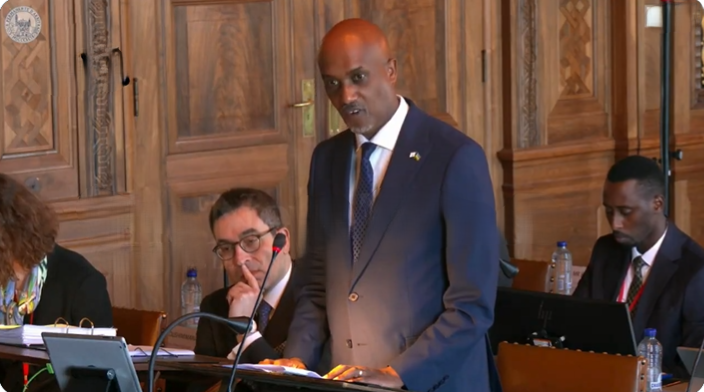
Rwanda v. UK: Upholding the Integrity of International Agreements
Today on the 18th of March, a hearing of the case involving Rwanda v. UK at the Permanent Court of Arbitration in The Hague has commenced. It is…
Child Rights Protection: Advancing a Child-Friendly Justice System in Rwanda
From 26th to 27th February 2026, the Institute of Legal Practice and Development (ILPD), in partnership with UNICEF Rwanda, convened a two-day…